Decide what the cleared site should contain
Before work begins, identify whether the pad, runners, piers, anchors, steps, utility stubs, driveway, fencing, and vegetation stay. The written scope should describe the resulting condition without implying engineered work that is not included.
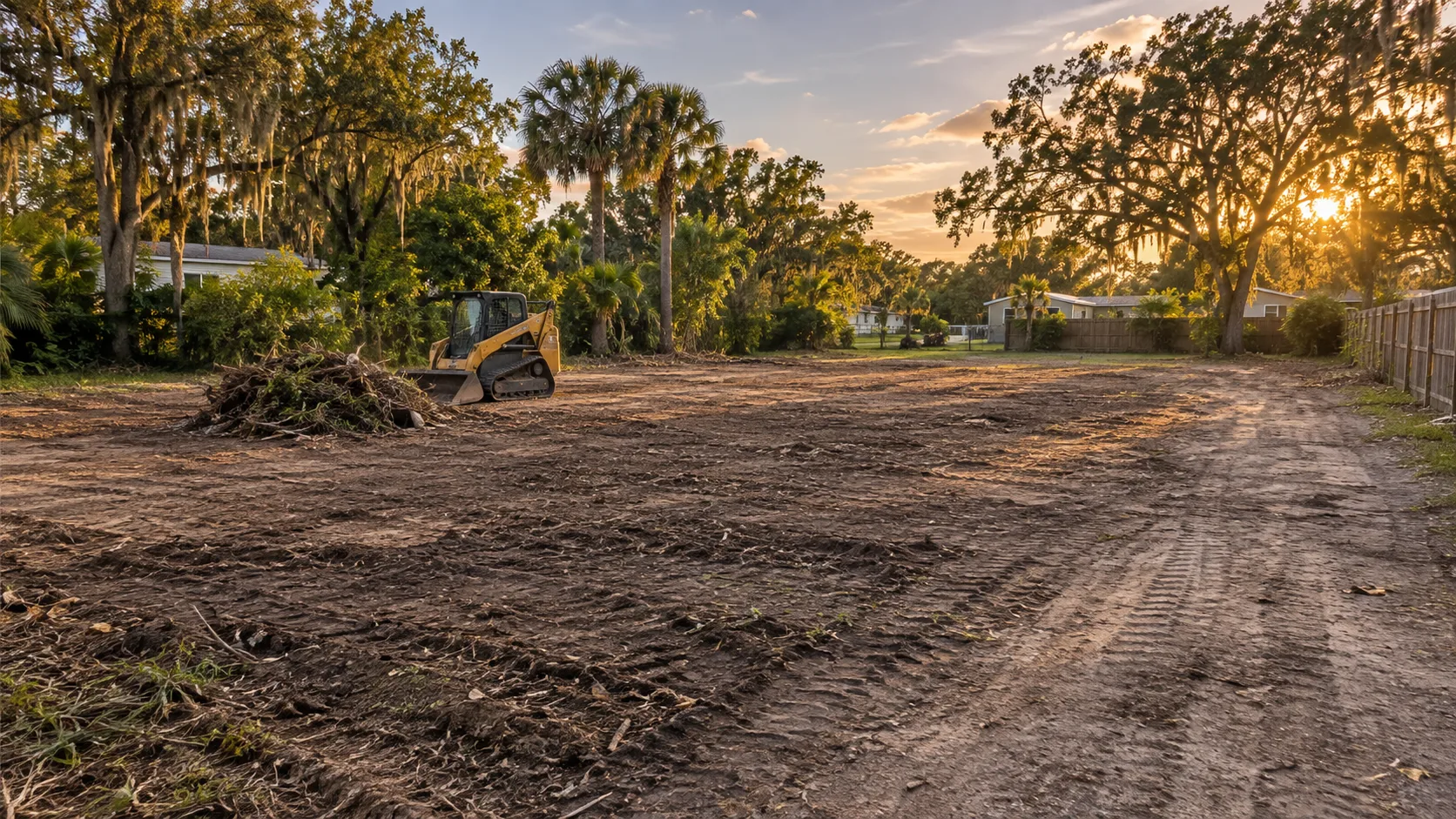
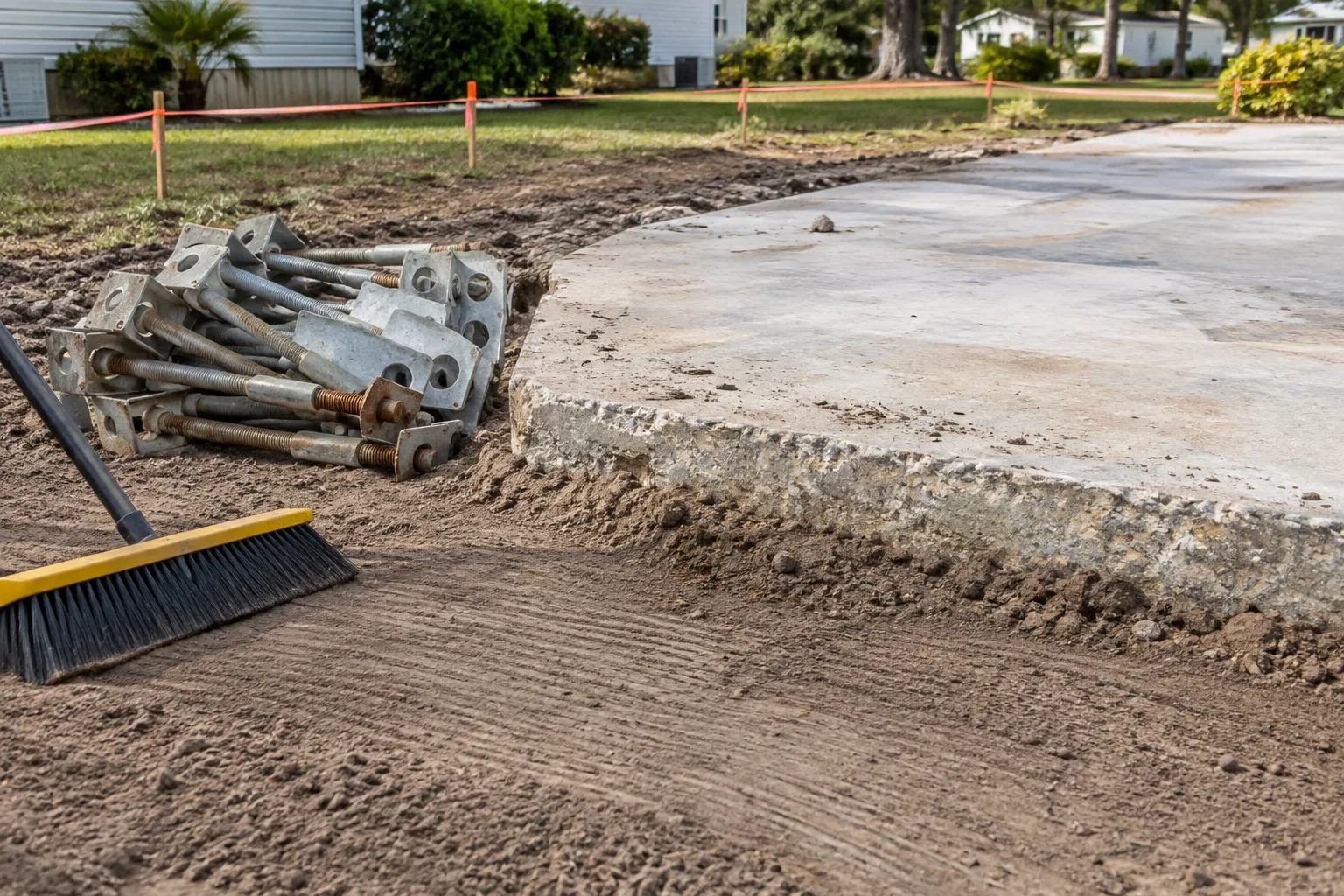
Use a finish checklist
- Loose debris removed from the agreed work area
- Piers and blocks kept or removed as written
- Tie-downs and anchors addressed as written
- Pad or runners kept, broken, or hauled as written
- Utility stubs protected or handled by the responsible trade
- Backfill and rough grade defined without promising engineered finish work
Separate cleanup from future construction
A rough-cleared lot is not automatically ready for a new home. Survey, drainage, soil, compaction, utility installation, engineered grading, and foundation work may belong to the next project.
- Document the propertyRecord the structure, additions, visible condition, utilities, access route, and requested finish.
- Confirm the work planMatch permits, utility steps, equipment, containers, transport, disposal, and cleanup to the site.
- Complete the approved scopeCarry out the agreed work and leave the pad, piers, anchors, debris, and ground in the written condition.
Questions about this scope
Can the concrete pad stay?
Yes, when the owner wants it retained and local requirements allow the next use.
Does cleanup include grading?
Only the level written into the scope. Rough smoothing differs from engineered grading or drainage work.
What happens to utility stubs?
The responsible utility or licensed trade should define disconnection and safe termination.